



Solar Panels


What Is a Solar Panel and How Does It Work?
A solar panel is a smart energy solution that turns sunlight into electricity without using fuel or producing pollution. It works by capturing solar energy through silicon-based PV cells, generating DC power, and converting it into AC electricity that powers your home or business.
Process: Sunlight → Solar Cells → DC Electricity → Inverter → AC Electricity → Home/Grid
Major Types of Solar Panels Used in India
There are three main types of photovoltaic (PV) solar panels available today, each designed for different energy needs and budgets.
1. Monocrystalline Solar Panels: Monocrystalline solar panels are made from a single silicon crystal, offering high efficiency (18–22%), excellent low-light performance, and a lifespan of 25–30 years. They require less roof space and are ideal for homes, businesses, and industrial solar projects.
2. Polycrystalline Solar Panels: Polycrystalline solar panels are manufactured using multiple silicon crystals. They are more affordable than monocrystalline panels and provide 15–18% efficiency with a lifespan of 25+ years. These panels are a cost-effective choice for residential and commercial installations with ample roof space.
3. Thin-Film Solar Panels: Thin-film solar panels are lightweight and flexible, making them suitable for portable systems, commercial projects, and BIPV applications. They offer 10–13% efficiency and typically last 20–25 years. However, they are less common for residential rooftop installations due to their lower efficiency.
Latest Solar Panel Technologies in India (2026)
India's solar industry is rapidly adopting advanced solar panel technologies that deliver higher efficiency, longer lifespan, and better energy generation. Here's a quick comparison of the most popular technologies.
1. PERC Solar Panels (Mono PERC Technology): Mono PERC(Passivated Emitter and Rear Cell) solar panels feature an additional passivation layer that captures more sunlight and improves energy conversion, making them more efficient than conventional monocrystalline panels.
• Efficiency: 20–23%
• Lifespan: 25–30 Years
• Best For: Residential, commercial, and industrial rooftop installations.
2. Bifacial Solar Panels: Bifacial solar panels generate electricity from both the front and rear sides by utilizing reflected sunlight, increasing overall energy production.
• Efficiency: 21–24% (plus 5–30% additional energy from the rear side)
• Lifespan: 30+ Years
• Best For: Solar farms, commercial buildings, and ground-mounted projects.
3. N-Type TOPCon Solar Panels: N-Type TOPCon (Tunnel Oxide Passivated Contact) technology offers higher efficiency, lower degradation, and better performance in high temperatures than conventional solar panels.
• Efficiency: 22–24.5%
• Lifespan: 30+ Years
• Best For: Residential, commercial, utility-scale, and high-performance solar projects.
4. Emerging Solar Technologies: The solar industry continues to innovate with advanced technologies such as:
• Heterojunction Technology (HJT)
• Perovskite Solar Cells
• Concentrated Photovoltaics (CPV)
• Tandem Solar Cells
Why Should You buy Solar Panels?
Here are the top reasons why more homeowners and businesses are switching to solar.
• Save on Electricity Bills: Generate your own electricity and significantly reduce your monthly power bills.
• Clean & Renewable Energy: Produce clean electricity without harmful emissions and help protect the environment.
• Long Lifespan: High-quality solar panels can last 25–30 years with minimal maintenance.
• Government Subsidies: Take advantage of government subsidy schemes to lower your solar installation cost.
• Low Maintenance: Solar panels require very little maintenance and only occasional cleaning for optimal performance.
• Increase Property Value: Installing a solar system can increase the value and appeal of your property.
• Energy Independence: Reduce your dependence on the grid and protect yourself from rising electricity prices.
• Better Return on Investment: Enjoy long-term savings with a reliable system that delivers excellent value over its lifetime.
How Much do Solar Panels Cost in India ?
Solar panels are an ideal way to reduce electricity bills and generate clean energy. However, when it comes to installation, then, the major cause of concern is solar panel price in India. The solar panel cost in India is affected by a wide range of factors, including the cost of raw materials, the availability of land for installation, the scale and efficiency of production, and government subsidies.
Applications of Bluebird's Solar Panels
1. Residential Rooftops
2. Commercial Buildings
3. Industrial Facilities
4. Agricultural Applications
5. Utility-Scale Solar Projects
6. Off-Grid & Remote Areas
7. EV Charging Stations
Where Should You buy Solar Panels?
Choose a trusted solar panel manufacturer like Bluebird Solar that offers high-quality, certified solar panels, reliable warranties, and dependable after-sales support for long-term performance. Bluebird solar panels are a popular choice among homeowners and businesses alike. Choose an ALMM-listed manufacturer offering BIS-certified solar panels, long-term performance warranties, nationwide service support, and proven manufacturing expertise. Bluebird Solar provides Mono PERC and N-Type TOPCon solar panels backed by industry certifications and comprehensive warranties.
Frequently Asked Questions
The Solar PV panel prices in India typically range from INR 30 to 70 per watt, with an average cost of around INR 40 per watt.
The solar plate cost depends on several factors, including panel technology, wattage, brand, manufacturing quality, and installation requirements.
Eligible residential consumers installing an approved rooftop on-grid solar system can receive subsidies under the PM Surya Ghar Muft Bijli Yojana.
Subsidy Details:
- 1kW Solar System: ₹30,000
- 2kW Solar System: ₹60,000
- 3kW – 10kW Solar System: ₹78,000
Solar panels and solar PV modules are commonly used interchangeably. Both refer to devices that generate electricity from sunlight using photovoltaic cells.
TOPCon solar panels are among the best choices in 2026 due to their higher efficiency, lower degradation, and better long-term energy generation.
Solar panel rates can change due to fluctuations in raw material costs, manufacturing capacity, import policies, and government regulations such as ALMM and DCR requirements.
When comparing solar PV module prices, consider not only the cost but also the panel efficiency, warranty, certifications, degradation rate, and after-sales support. Selecting a trusted manufacturer helps ensure better performance and reliability over the system's lifetime.
The number of solar PV panels required to run an air conditioner depends on the AC capacity, daily usage hours, solar panel wattage, and sunlight availability.
Approximate Solar Panel Requirement for AC
- 1 Ton AC → Usually requires around 4 to 6 solar panels
- 1.5 Ton AC → Usually requires around 6 to 8 solar panels
- 2 Ton AC → Usually requires around 8 to 12 solar panels
These estimates are based on high-efficiency solar panels ranging from 540W to 600W and average sunlight conditions in India.
The roof space required for solar panels depends on the solar system size, panel wattage, and panel efficiency. On average, a rooftop solar system requires around 80 to 100 square feet of shadow-free area per kW.
Approximate Roof Space Requirement
- 1kW Solar System → 80–100 sq. ft.
- 2kW Solar System → 160–200 sq. ft.
- 3kW Solar System → 240–300 sq. ft.
- 5kW Solar System → 400–500 sq. ft.
- 10kW Solar System → 800–1000 sq. ft.
Yes, solar modules can work during power cuts, but it depends on the type of solar system installed.
Currently, advanced solar technologies such as N-Type TOPCon, HJT (Heterojunction), and IBC (Interdigitated Back Contact) solar panels offer the highest efficiency levels in the commercial solar market.
Bluebird Solar manufactures high-quality BIS-certified and ALMM-listed photovoltaic panels using advanced technologies such as Mono PERC, TOPCon, and Bifacial modules. With over 47 years of experience in the power industry, Bluebird Solar delivers reliable, efficient, and durable solar solutions for residential, commercial, and utility-scale projects.

47 Years of Experience

Quality Assurance

1GW+
Modules Supplied

Free Delivery

Easy Return
A Promise of Quality


A Promise of Quality
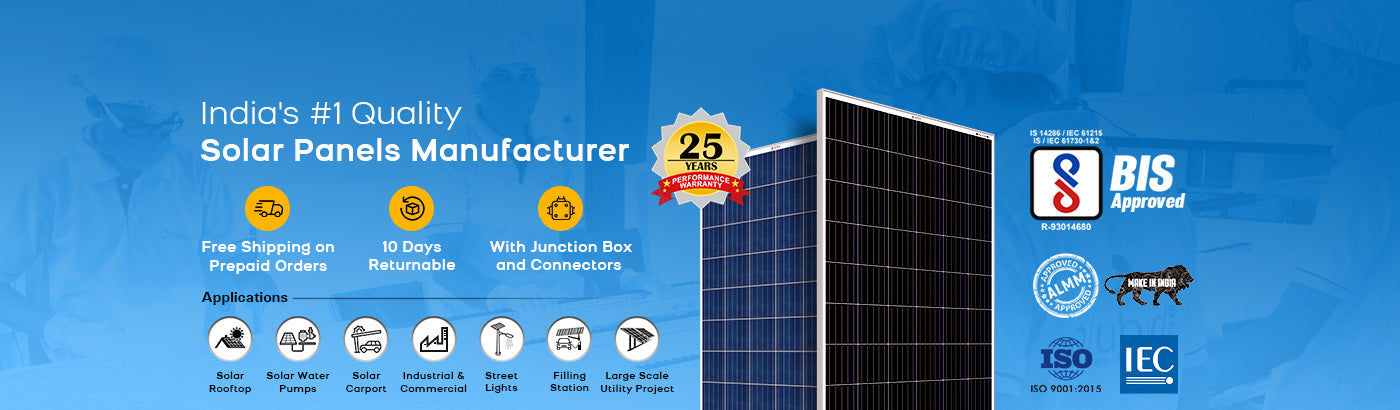
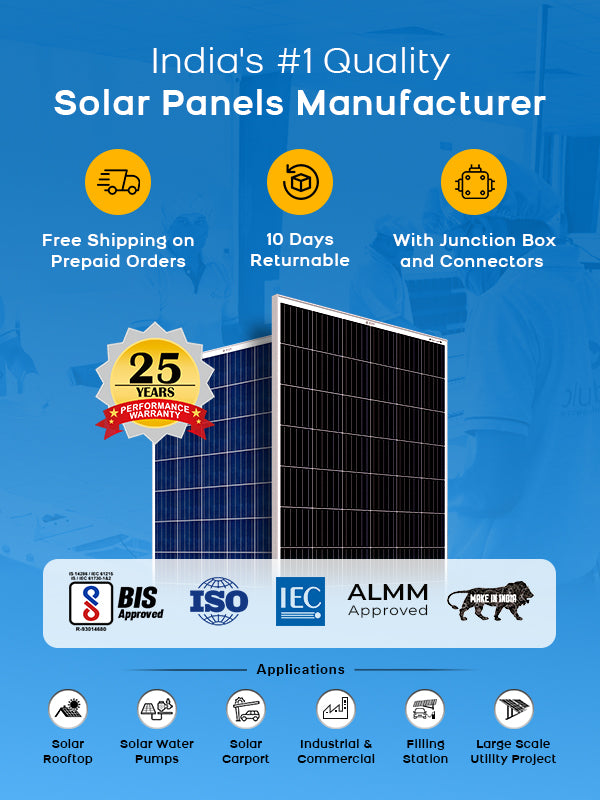
Installing solar panels is a big investment and with Bluebird Solar, you can rest assured knowing you have 25 Years of Performance Warranty.
A Guaranteed Power Output Of 90% For 10 Years and 80% For 25 Years

